
Old battery inverter sale in Matiala by Oldy
Operating a high-turnover service-based commercial venture, managing an expanding semi-industrial asset, or administering a high-density multi-floor builder floor layout within the fast-growing sectors of Matiala requires absolute mechanical and logistical efficiency. From the active commercial trading points near Matiala Village to the extensive residential properties flanking the outer boundaries of Dwarka and Uttam Nagar, everyday operations and domestic stability rely heavily on a single piece of utility infrastructure: a continuous, uninterrupted supply of clean electrical energy. However, the unique distribution realities of West Delhi present serious seasonal hazards. During the grueling peak summer months, localized electrical grids experience extreme thermal stress and transformer load spikes, resulting in sudden phase failures, extensive rolling power outages, and dangerous voltage drops.
For local business owners, private workspace setups, and active domestic properties, an unmanaged power failure is not a minor inconvenience; it represents an immediate financial liability that can crash local network servers, damage digital point-of-sale systems, corrupt local electronic databases, freeze electronic security systems, and cause immediate loss of consumer trust. Constructing a resilient defense requires a high-capacity, heavy-duty pure sine wave inverter system paired with an optimized, chemically sound industrial battery bank. Navigating the secondary commercial market in Matiala to procure a new system, sell off a legacy power setup, or trade in completely dead scrap batteries requires a deep understanding of current asset valuation and electrical engineering principles. This comprehensive guide breaks down the technical and commercial strategies required to optimize your backup power investments, unlock top commodity value for scrap, and secure your property’s power needs through Oldy.
The Replacement Realities: Liquidating Legacy Backup Hardware Before Complete System Burnout
Retaining a structurally compromised inverter chassis or a degraded lead-acid battery block long past its specified engineering lifespan is a major financial mistake made by property administrators. An obsolete power backup setup does far more than leave your operations vulnerable during a sudden black-out; its failing internal circuitry actively damages your building’s primary electrical wiring, draws excessive phantom current from the main power grid, and severely drives up your monthly commercial electricity bills.
Establishments generally decide to liquidate functional pre-owned systems or scrap their dead blocks due to severe capacity drops and natural mechanical wear. As properties add modern appliances, specialized network hardware, split-inverter climate units, or high-draw computer workstations, a legacy low-capacity or square-wave inverter simply cannot manage the high inductive startup currents. Forcing an outdated system to carry modern commercial electrical loads leads to frequent system trips, blown internal protection fuses, and permanent localized burnouts on the printed circuit board. Upgrading to a modern, high-capacity Pure Sine Wave hybrid model or an intelligent digital backup system becomes a basic necessity, making it highly logical to liquidate old functional assets to recover value and offset your new capital investments.
The companion lead-acid battery block faces a parallel chemical degradation cycle. Tubular and flat-plate batteries operate on internal chemical grid reactions that naturally decay over three to five years, especially when stored in tightly enclosed, high-heat service areas or poorly ventilated shafts typical of Matiala village configurations. Internal plate sulfation causes your total backup runtime to plummet rapidly, leaving you with a system that drops power just a few minutes after a power cut begins. Continually charging a heavily sulfated battery bank forces the internal inverter charger to run constantly at high temperatures, which cooks the remaining active materials, causes the outer plastic casing to swell, and creates a clear fire hazard. Selling your compromised battery asset to a certified secondary dealer like Oldy allows you to recover crucial raw material capital before the system experiences complete thermal failure.
The Technical Sizing Matrix: Engineering Total Reliability for Your Inverter and Battery Layout
Purchasing commercial power equipment requires calculating your exact electrical consumption profile rather than picking an arbitrary model based on retail marketing claims. A backup system that is poorly matched to your active consumption patterns will suffer immediate runtime failure under full load.
First, you must select the correct output waveform. While cheap square wave and modified sine wave models are widely sold across local electrical wholesale markets, they carry massive hidden risks for modern business operations. They produce a jagged, uneven electrical wave profile that introduces severe harmonic distortion into sensitive digital components. This causes routers to drop connections, office laptops to overheat, and ceiling fans to emit a continuous, loud humming noise. Investing in a Pure Sine Wave inverter is non-negotiable for commercial premises; it matches smooth grid utility power perfectly, keeping your expensive electronic hardware running safely. Next, you must calculate the volt-ampere load profile.
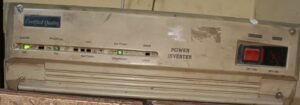
To determine your purchasing target, calculate the combined wattage of all essential commercial assets that must remain online simultaneously during a blackout. For instance, a typical local office running six LED ceiling panels, three high-speed fans, a desktop billing computer, and an active electronic storefront shutter might generate a consistent running load of approximately 800 watts. To identify the minimum required inverter capacity, apply the standard electrical power factor margin by dividing the total operational wattage by a power factor of 0.8, which gives you 1000 VA. By adding a highly recommended 25 percent safety buffer to handle initial inductive startup surges safely, the business owner instantly knows to buy an 1100VA to 1500VA inverter unit.
Finally, you must determine the true ampere-hour battery runtime. The inverter governs the total wattage capacity, but the battery determines the actual hours of backup runtime. If a commercial unit requires a stable five-hour operational window for a consistent 400-watt load on a standard 12V system, you must multiply the 400 watts by 5 hours to get 2000 watt-hours of total required energy. Dividing this by the 12V battery voltage and factoring in an inverter efficiency multiplier of 0.8 gives you a target capacity of 208.33 AH. This mathematical formula guides the corporate buyer directly toward a heavy-duty 220AH tall tubular configuration, eliminating the risk of buying under-sized equipment that cuts out mid-way through a blackout.
Unlocking True Commodity Value: Transparent Weight-Based Battery Scrap Trade-Ins
If you are looking to liquidate functional, pre-owned backup systems, sell off old backup gear, or trade in completely dead batteries, the local commercial market offers excellent scrap returns, provided you avoid unverified local scrap pickers who use arbitrary flat rates. When selling a working inverter unit or a functional used battery bank, the secondary market valuation depends heavily on brand presence and circuit condition. Recognized, certified brands like Luminous, Microtek, Livguard, Exide, and Amaron retain their secondary value remarkably well. Presenting a clean, dust-free chassis with solid copper terminals prevents dealers from reducing your cash payout during valuation checks.
For dead batteries and scrap power units, the exchange system is driven entirely by weight-based commodity scrap value. Raw lead is a highly regulated, intensely recycled heavy metal. Premium manufacturing brands offer significant financial incentives for recovering old battery casings to keep their sustainable, closed-loop factories supplied with raw materials. Unlike unverified roadside dealers who quote low, arbitrary flat prices for your high-value assets, Oldy establishes complete transparency by utilizing direct weight-based metrics. In the current Matiala secondary market, we offer a certified price range from 110 to 125 rs per kg for old lead-acid battery scrap. By anchoring the valuation directly to the true physical weight and pure material content of the battery, business owners can precisely calculate their return on asset disposal. For a large institutional corporate setup or a busy workspace offloading multiple heavy-duty tall tubular batteries, this transparent pricing framework translates directly into thousands of rupees in recovered capital, drastically minimizing the net cost of upgrading your power backup inventory.
The Oldy Advantage: Streamlined Enterprise Asset and Power Management
With hundreds of independent street vendors, unverified appliance shops, and roadside mechanics operating across the busy sectors of Matiala, finding a reliable, professional enterprise partner is critical. Relying on an unverified, low-cost dealer often results in buying poorly refurbished internal circuitry, local non-warranty battery blocks, or systems with mismatched power metrics that break down during the worst stretch of the summer season.
Partnering with an authorized, full-service commercial dealer like Oldy ensures your business receives genuine, factory-fresh inventory backed completely by official brand manufacturer warranties. The engineering team at Oldy goes far beyond basic over-the-counter retail sales. They provide comprehensive technical infrastructure planning, evaluating your property’s internal wiring networks for hidden neutral faults, calculating correct surge ratings, checking structural layout ventilation, executing safe physical mountings along dense builder floor shafts, and installing replacement backup equipment with strict adherence to safety standards. Every single transaction and exchange is documented transparently, protecting your business investment from unexpected failures. Every repair or trade-in is backed by an official workmanship guarantee, ensuring that your premium infrastructure continues to operate at peak factory capacity long after our field technicians leave your doorstep.
Do not wait for the next major grid breakdown, transformer failure, or heatwave to halt your business transactions, freeze your digital billing portals, or compromise your property’s safety. Take total control of your commercial and residential power infrastructure today. For professional, transparent electrical load calculations, direct system sales, top-tier secondary market trade-in values from 110 to 125 rs per kg, or custom multi-floor corporate installations across Matiala, trust the specialists at Oldy. Call and send a direct WhatsApp message to +91 83830 36282 to schedule your comprehensive onsite technical evaluation call today.